Key Takeaways
- Exploring creative hobbies can support cognitive health and provide a sense of purpose.
- Senior living communities offer a social and supportive setting to try new activities like painting, writing, or music.
- Group activities help foster social connections and create a sense of belonging.
- Hobbies are a key part of an engaging lifestyle in both assisted living and memory care environments.
Find a New Creative Outlet in Senior Living
As you or a loved one transitions into a new chapter, you might wonder how to stay engaged and find new interests. A supportive community like Inspired Living at Ivy Ridge provides the perfect backdrop to explore creative pursuits. It’s a chance to try something you’ve always been curious about or to revisit a long-lost hobby in a welcoming social setting.
There are so many ways to express your creativity and connect with others who share your interests. For those who may need additional support, communities offering assisted living for dementia create safe and nurturing environments where hobbies can flourish. Taking up a new hobby is a wonderful way to enrich your daily life, meet new people, and continue learning and growing.
Explore Different Forms of Art
Art comes in many forms, with options for every skill level and interest. You don’t need previous experience to get started, as it’s all about enjoying the process. Meaningful cultural and creative activities can spark joy and build a sense of accomplishment.
Visual Arts to Try
Working with your hands on tactile projects like pottery or knitting can be calming and rewarding. These activities help maintain fine motor skills, and as research shows, participating in the arts can support healthy aging by improving well-being. This could include:
- Painting and drawing
- Pottery and sculpture
- Photography
- Crafts like knitting or woodworking

Written Expression
If you prefer words, there are many avenues for written expression. You can document your life story, create new worlds, or simply discuss a good book with friends. Joining a group can add a fun, social element to these pursuits.
Writing can be a powerful tool for reflection, while reading is known to have benefits like strengthening brain function and reducing stress. You can also try:
- Journaling or storytelling
- Poetry workshops
- Joining a book club
The Power of Music and Movement
Music and gentle movement are wonderful ways to express yourself, connect with others, and lift your spirits. In a specialized memory care setting, music can be particularly helpful for sparking positive engagement.
Musical Engagement
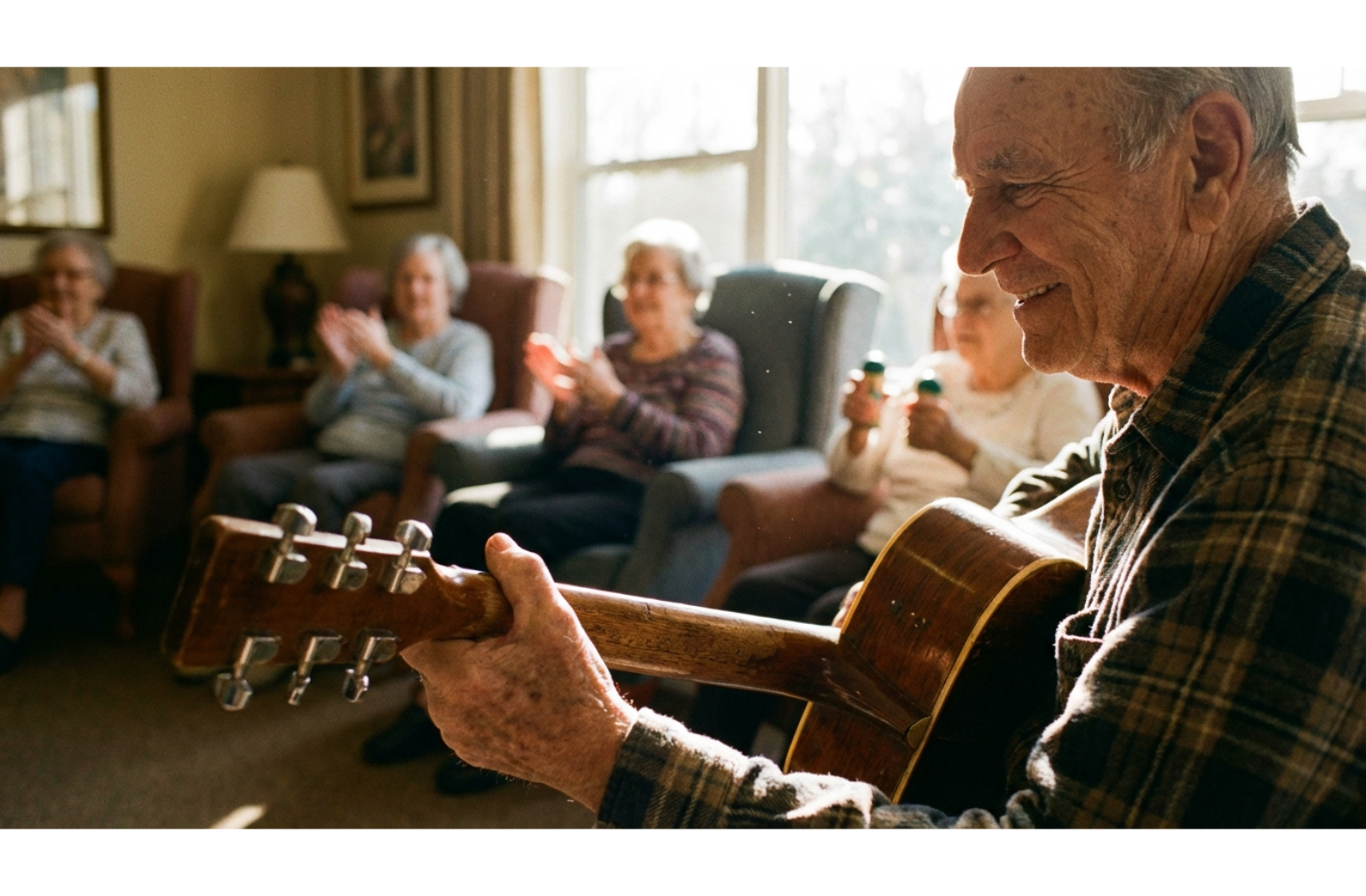
You don’t need to be a trained musician to enjoy music. Shared experiences are about connection, and studies on music therapy’s effectiveness show it can improve well-being. Group settings make it easy to participate by singing familiar tunes or listening to a new genre. Try:
- Sing-alongs and choirs
- Music appreciation groups
- To learn a simple instrument
Gentle Movement
Staying active is important for both physical and mental well-being. Gentle movement classes are adapted for all mobility levels, so you can participate comfortably. It’s a great way to start your day with energy and a positive outlook.
Activities like chair yoga for seniors can improve flexibility and balance from a seated position. Many health and wellness programs include adapted activities to fit different needs like:
- Chair yoga
- Dance classes adapted for all mobility levels
- Tai Chi
Nurture Your Well-Being with Purposeful Hobbies
Other hobbies beyond arts and crafts can provide satisfaction and contribute to your well-being. Activities that connect you with nature or challenge your mind offer a sense of purpose and structure to your day.
The Joy of Gardening
Tending to plants, whether in a container or a community garden, can be very therapeutic. Nurturing something and watching it grow is rewarding and provides a reason to get outdoors. Gardening offers many physical and mental health benefits, from reducing stress to offering light exercise.
Keep Your Mind Sharp with Games
Keeping your mind engaged is just as important as keeping your body active. Games can help you stay mentally sharp while having fun, and you can enjoy them alone or with friends. There are many brain games for seniors to choose from, like puzzles or trivia. Staying mentally active is a cornerstone of maintaining cognitive health as you age.
Build Connections Through Shared Hobbies
Hobbies are often more fun when you share them. Group activities offer a natural way to meet new people and form lasting friendships within your senior living community. Working on a project together or learning a new skill side-by-side builds a sense of camaraderie.
Social Benefits of Group Activities
Joining a group that shares your interests can make a big difference in your daily experience. It’s a simple way to stay connected, feel like part of a community, and avoid the health risks of social isolation and loneliness. The benefits of group activities often include:
- Creating a sense of belonging
- Reducing feelings of isolation
- Providing opportunities for teamwork and collaboration
For those using respite care, these group settings are a great way to join the community and participate right away. It helps make a short stay feel more engaging and welcoming.
Discover a Fulfilling and Active Lifestyle
Pursuing creative hobbies is a key part of a vibrant lifestyle in senior living. It’s about more than just passing the time. It’s about growth, connection, and joy. A community that supports these passions helps you or your loved one live a rich and engaging life.
The team at Inspired Living at Ivy Ridge is dedicated to cultivating a lifestyle that enriches the mind, body, and spirit. With a focus on purposeful activity, residents are supported in finding new ways to thrive. If you’re ready to explore a community that values creativity and connection, you can schedule a visit to learn more.